Driveway crossings: recognise and give way
Recognise a driveway from its context and construction. When entering or leaving, let all other traffic go first, including pedestrians and cyclists.
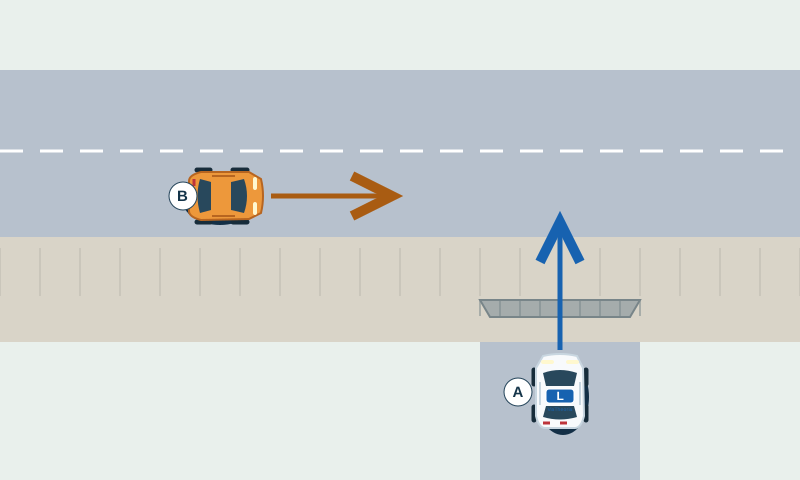
A driveway can serve a garage, car park or premises. A side street can also have a recognisable driveway crossing. A clearly limited-access destination and the physical design can both matter. A narrow street, different asphalt or a 30-zone sign alone does not prove that it is a driveway.
Look for the pavement or cycle path along the continuing road extending across the access at approximately the same height and with similar surfacing. Sloped entrance kerb blocks can make the construction recognisable. Assess the whole layout: not every speed hump is a driveway and an uncontrolled junction need not have priority signs.
Joining the road from a driveway is a special manoeuvre. Let all other traffic go first: a car from the left, a cyclist from the right and a pedestrian on the pavement. “I come from the right” or “there are no give-way markings” does not entitle you to go first here. The obligation follows from the manoeuvre; a B6 sign is not required to create it.
Entering a driveway from the road is covered too. Before turning right into premises, check your mirror and blind spot and let the pedestrian on the continuing pavement and cyclist on the cycle path go first. Indicating communicates your intention but does not give priority.
A cycle path beside a driveway can carry traffic in both directions. Actively check for approaching cyclists from both left and right. Also look for mobility scooters and pedestrians. Someone walking a bicycle remains a pedestrian; your special manoeuvre still requires you to let them go first.
Is visibility obstructed by a wall, hedge or parked car? Approach slowly, first allow traffic on the pavement or cycle path through, and cautiously obtain a view without blocking others. Seeing nobody yet is not proof that the road is clear. A stop sign or instruction may impose an additional requirement.