Reaction distance & stopping distance
The car keeps travelling while you notice a hazard and respond. Braking comes afterwards.
Stopping distance equals reaction distance plus braking distance. Reaction distance is travelled before braking; braking distance runs from the start of braking to a standstill.
At the same reaction time, reaction distance grows in proportion to speed. 50 km/h is about 13.9 metres per second. With a one-second reaction time, you travel about 14 metres before braking. This is a calculation example, not a fixed reaction time for everyone.
With constant braking deceleration, braking distance grows with the square of speed: double speed gives four times the braking distance in this model. Actual distances also depend on tyres, road surface, brakes and conditions. Tiredness and distraction can delay the response itself.
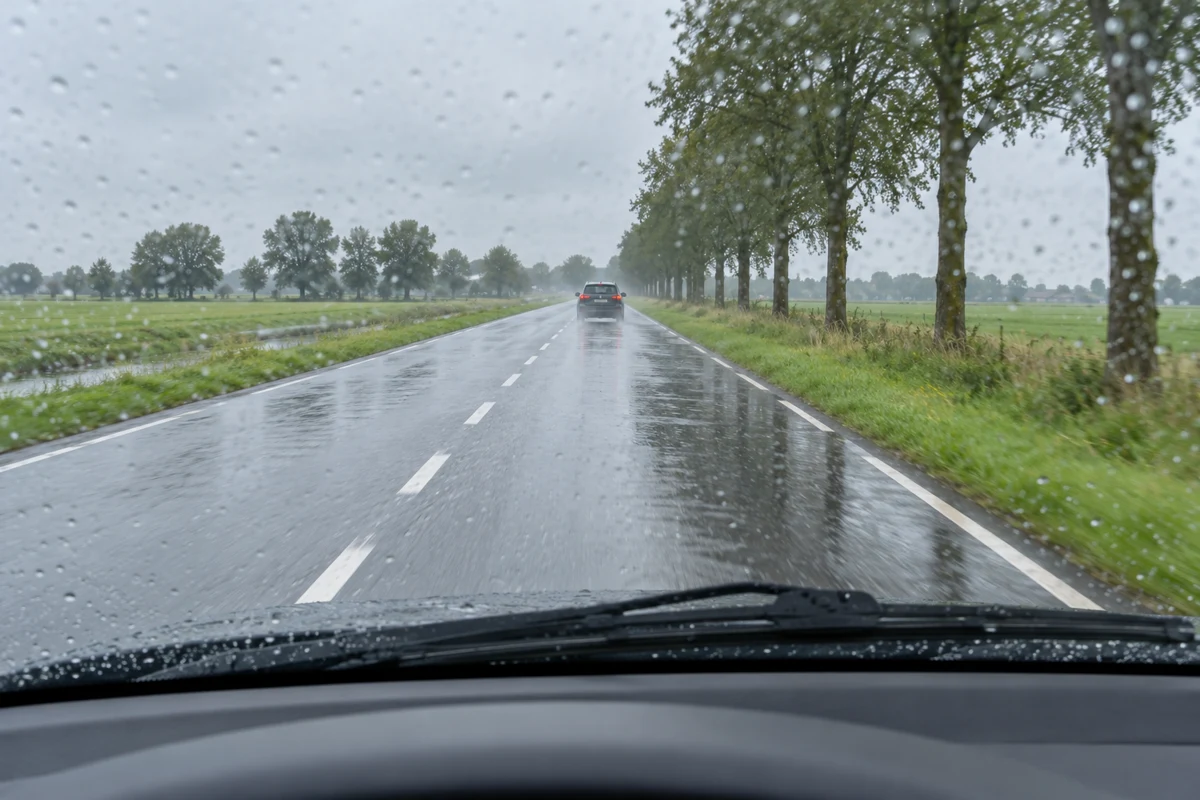
Adapt speed and following distance in rain, fog and slippery conditions. You must be able to stop within the visible, clear distance. A photo without distances and movement may not establish one correct choice between braking and easing off; assess the actual situation.