Safe driving & lighting
Driving in fog: which lights should you use?
Dipped headlights, front fog lights and rear fog lights have different rules. Clear examples explain what you may use in fog, snowfall and heavy rain.
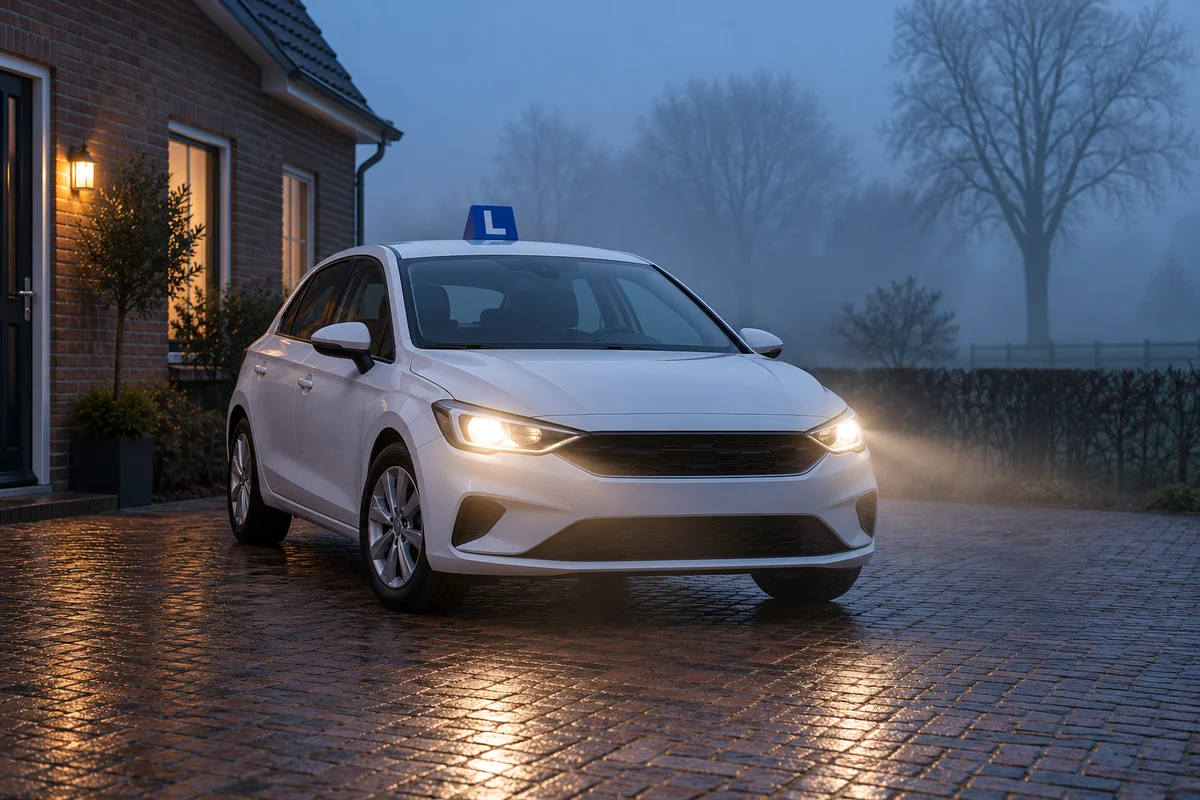
Check the lights before setting off
You are about to leave on a foggy morning. It is daylight, but your surroundings are difficult to see. Do not rely only on the light switch being in AUTO. The system may respond to daylight even though fog remains. Check which lights are actually on, including at the rear. Daytime running lights make the front more visible, but do not switch on the rear lights in every car. Manually select dipped headlights when needed in poor visibility. Find the controls first while the car is safely stationary.
Front and rear fog lights have different rules
Front fog lights are fitted at the front. You may use them when fog, snowfall or rain seriously reduces visibility. The rear fog light is the bright red light at the back. It has a stricter condition: fog or snowfall must reduce visibility to less than 50 metres. Heavy rain alone therefore does not permit the rear fog light. Fog lights are permitted under the relevant conditions; they are not compulsory in every patch of fog. When front fog lights are used in accordance with the rule, dipped headlights do not have to be on at the same time.
What does less than 50 metres mean?
Imagine fog means you can see no farther than 40 metres. That is less than 50 metres, so you may use the rear fog light. If you can see exactly 50 metres, that is not less than 50 metres. This rule then does not permit the rear fog light. The same threshold applies in snowfall. Heavy rain with 40 metres of visibility does not permit the rear fog light: the cause of the poor visibility matters too. These distances are written examples; the illustration does not provide an exact visibility measurement.
Keep reassessing conditions on the journey
Fog can clear. If you can then see 80 metres, for example, switch the rear fog light off: the less-than-50-metres condition is no longer met. This avoids dazzling or disturbing others with the bright light. Adapt your speed and following distance to visibility too. Being able to see the car ahead does not make it safe to follow closely. Clean windows and mirrors before departure and watch for windows misting up inside. In very dense fog, consider postponing the journey.
Practise the decision, not just the number
For each situation, ask: what is reducing visibility, how far can I see and which light am I considering? Then compare fog at 40 metres with rain at 40 metres. The distance is the same, but the rear fog light decision differs. Explain why in your own words. Read the hazard perception lesson too and practise another situation before taking a full mock exam. Learn your learner car’s controls with your instructor; switches differ between cars.