Vehicle & preparation
Tyre pressure: cold tyres, loading and safe checks
Learn to find the correct tyre pressure, distinguish cold and warm tyres and account for loading. A clear checking routine for new drivers.
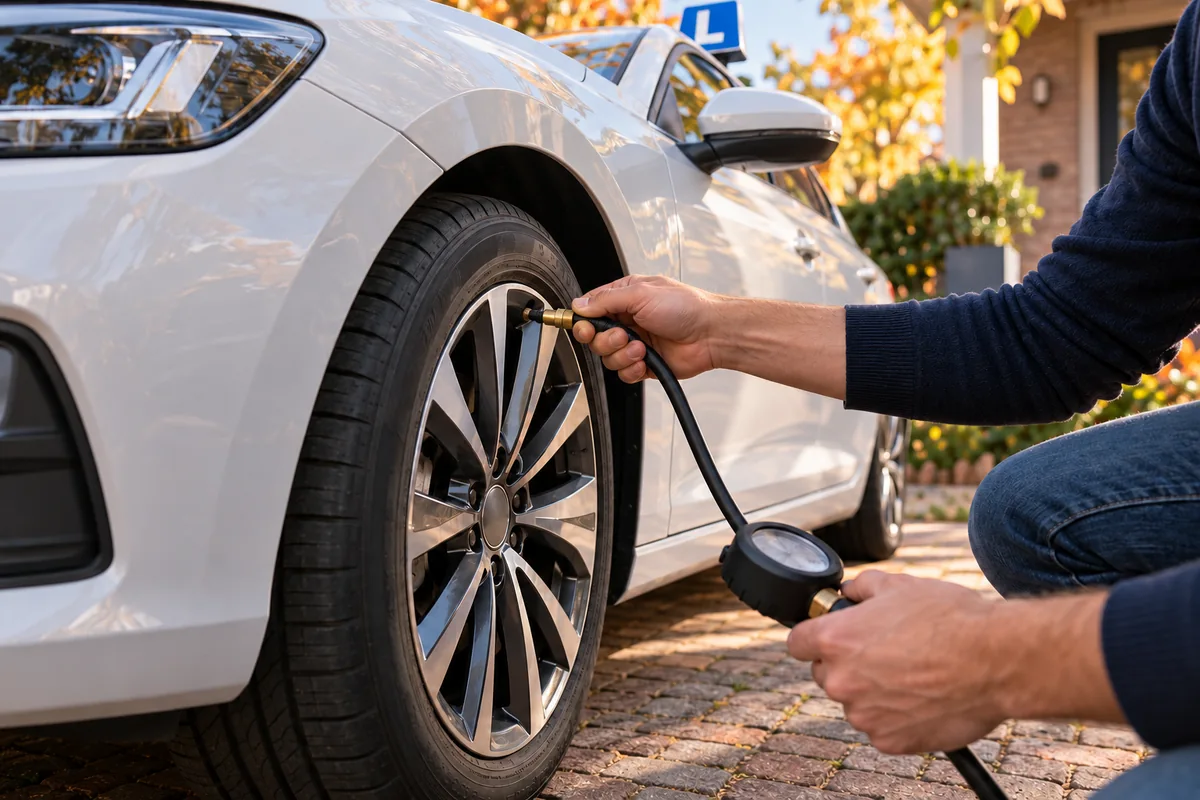
Start with your car, not a random number
You are at an air pump and someone says, “I always use the same pressure in every tyre.” That is not a sound basis for your check. The correct tyre pressure depends on the car, fitted tyres and specified use. Find the vehicle manufacturer’s recommendation, for example on a door-pillar label, inside the fuel flap or in the manual. Bar is a unit of pressure; it does not tell you how much tread remains. There is no single correct pressure for every car.
Why check cold tyres?
Driving warms the tyres and can raise the measured pressure. Cold tyres are approximately at the surrounding air temperature. Preferably plan the check before a longer journey and follow your car’s instructions. If the pressure reads higher after driving, do not simply release air to match a cold reference value. Allow the tyres to cool or ask a professional. Comparing a warm reading with a cold recommendation without considering temperature can lead to the wrong adjustment.
Check front, rear and loading too
A label may show different values for front and rear tyres and for different loads. Carrying passengers and luggage can require a different specified setting from a lightly loaded journey. Choose the appropriate row in the table rather than inventing an extra number of bar. Numbers on the tyre sidewall are not automatically the recommended operating pressure for your car. Ask your instructor or a tyre professional to explain an unclear label before making adjustments.
A warning light does not replace checking
TPMS means tyre pressure monitoring system. It can warn of low pressure, but do not wait for a warning before checking your tyres. Check regularly, for example monthly and before a long journey, according to the manual. Clearing a warning does not restore pressure. Follow the manufacturer’s instructions for checking, any repair and resetting. Cars use different systems, and not every car displays a numerical reading for each tyre.
Make checking a clear routine
Practise this sequence: find the manufacturer’s value, check that the tyres are cold, select the appropriate loading, measure and compare, then recheck after adjustment. Explain where the value comes from instead of memorising one number. Proper maintenance supports environmentally conscious driving; low pressure can increase fuel use. Connect this with hazard perception too: a modern car or warning system does not remove the need for maintenance. Read the linked lessons and practise different situations. The illustration is original editorial artwork, not a readable pressure measurement or vehicle-specific instruction.