Road signs abroad
No honking: a Turkish road sign explained
This Turkish sign is not in the standard Dutch road-sign list. Learn its meaning and when you may use your horn in the Netherlands.
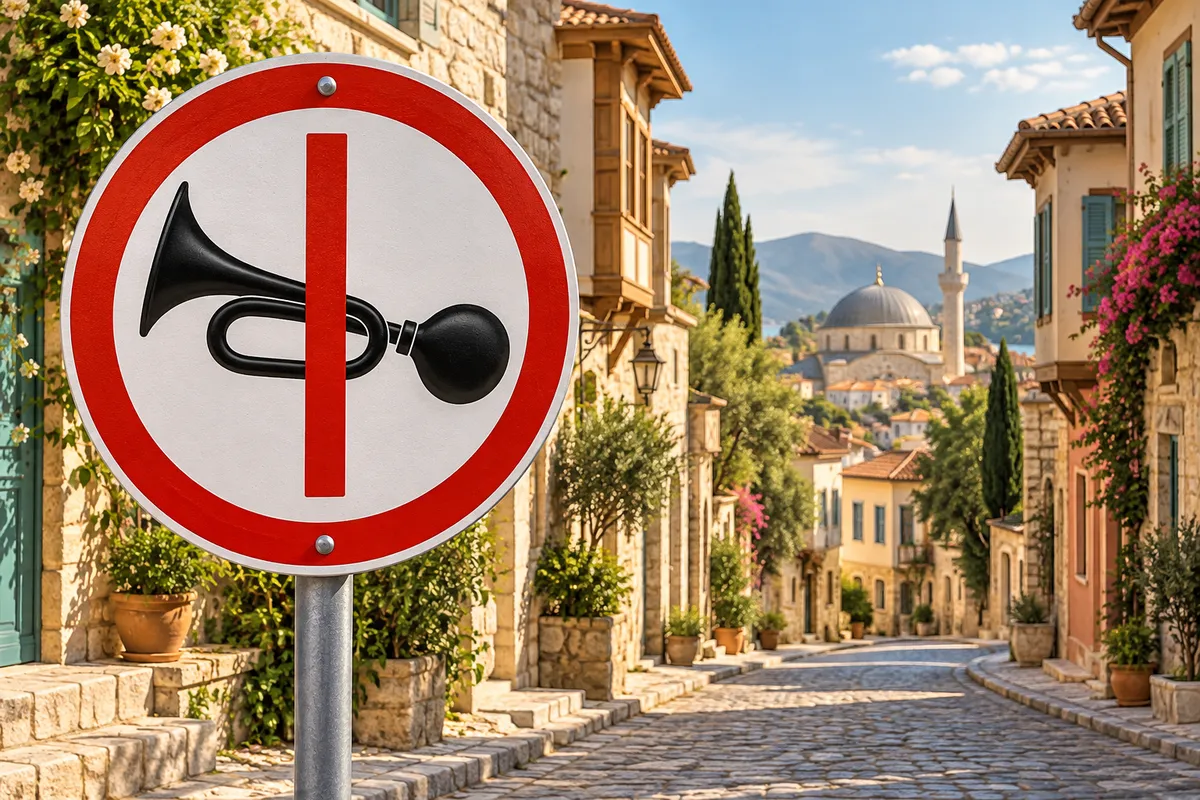
A familiar look, a different sign list
When travelling, you may encounter road signs you have not seen in Dutch theory lessons. That is a good reason to read the local rules before departure. The circular red border may look familiar, but countries do not all use exactly the same set of signs. An interesting example from Turkey is the sign showing a horn crossed by a red bar: no honking.
What does the Turkish sign mean?
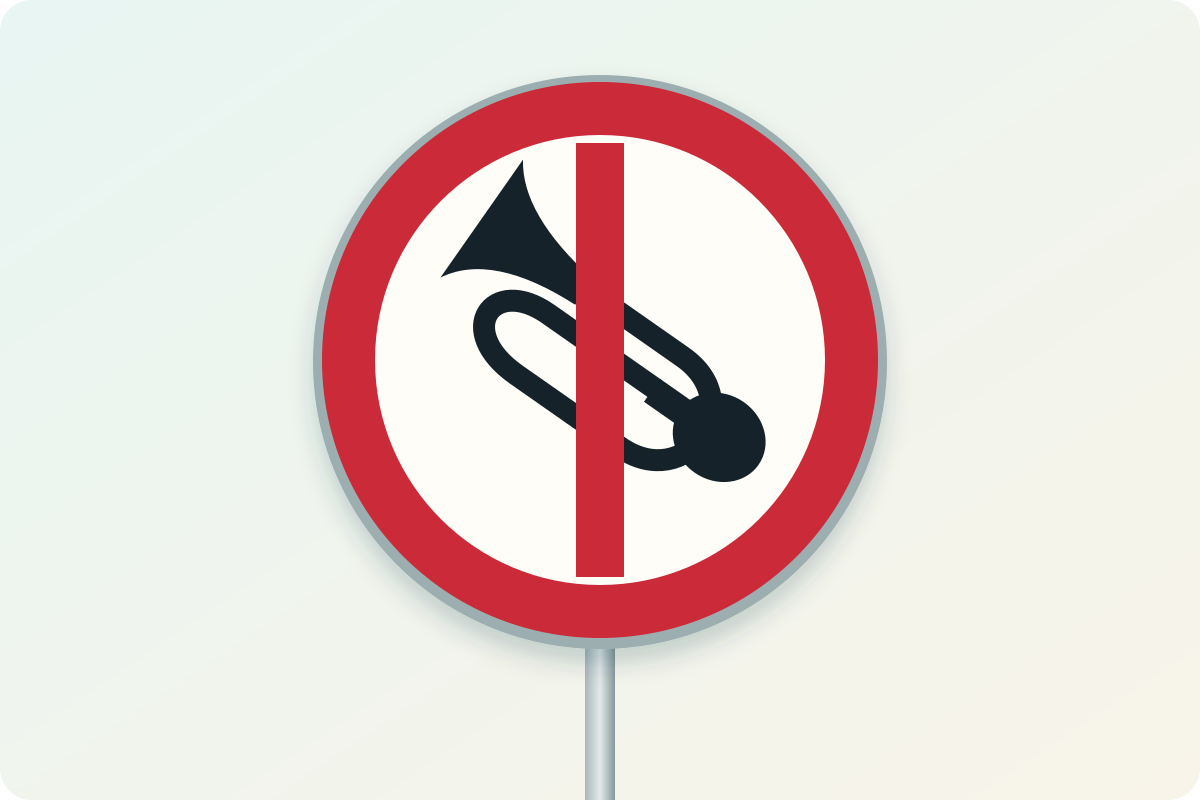
The Turkish road authority Karayolları Genel Müdürlüğü lists the sign as “Sesli ikaz cihazlarının kullanımı yasaktır”: the use of audible warning devices is prohibited. For a motorist, this is a no-horn restriction. The black symbol depicts a horn, not a musical instrument placed beside the road. The red border and bar identify the prohibition. The image below is our own educational drawing, not an official dimensional drawing.
Is this also a Dutch road sign?
This no-horn sign is not a standard road sign in Annex 1 of the Dutch Road Traffic Signs and Regulations 1990. That is more precise than saying you could never see it anywhere in the Netherlands: an image on private premises or an information notice is different from a standard sign in that statutory list. Do not learn foreign signs as if they automatically belong to the Dutch sign list.
No sign does not mean unrestricted horn use
In the Netherlands, drivers may give audible signals to avert imminent danger. The absence of a separate no-horn sign therefore does not permit honking as a greeting, celebration or expression of impatience. For ordinary horn use, the question is not “is there a prohibition sign?”, but “is this needed to avert imminent danger?”. The statutory rules for special emergency-service signals are a separate subject.
Two situations to understand the difference
Situation 1: the driver ahead remains stationary briefly after the traffic light turns green. You want to move sooner, but there is no imminent danger. Impatience is not a reason to sound the horn. Situation 2: a vehicle is reversing and is about to hit your stationary car. An audible warning may then be intended to avert that imminent collision. Continue to act safely yourself: sounding the horn does not replace necessary braking or avoidance when that is safely possible.
How to learn from road signs abroad
Connect each sign to three questions: which country is it in, what does it mean there, and which general rules apply alongside it? Use your knowledge of Dutch road signs as a starting point, but check local differences with the competent authority. This article explains the Turkish symbol and the Dutch horn rule; it is not a complete account of Turkish traffic law, all exceptions or the distances over which restrictions apply.
Common question: do “toeteren” and “claxonneren” mean the same thing?
In everyday Dutch, people often say “toeteren”. Here we use “claxonneren” and “audible signal” to make the connection with the road rule clear. For the Netherlands, remember: an audible signal warns against imminent danger; it is not a way to greet someone or hurry them along. Want to learn driving theory for free? Continue with road signs and hazard perception, then apply the rule to unfamiliar situations.
Sources
- Karayolları Genel Müdürlüğü — officiële standaardverkeersborden, bord met hoorn; geraadpleegd 16 oktober 2026
- Reglement verkeersregels en verkeerstekens 1990 — artikelen 28 en 31 en bijlage 1; gecontroleerd 16 oktober 2026
- Rijksoverheid — Welke verkeersborden en verkeersregels gelden in Nederland? Geraadpleegd 16 oktober 2026
- Gerechtshof Arnhem-Leeuwarden — uitspraak over geluidssignalen, 3 maart 2023