Stopping & parking
Can you stop at a bus stop?
Check the markings at the bus stop first. Learn when the 12-metre rule applies and how dropping someone off immediately differs from waiting.
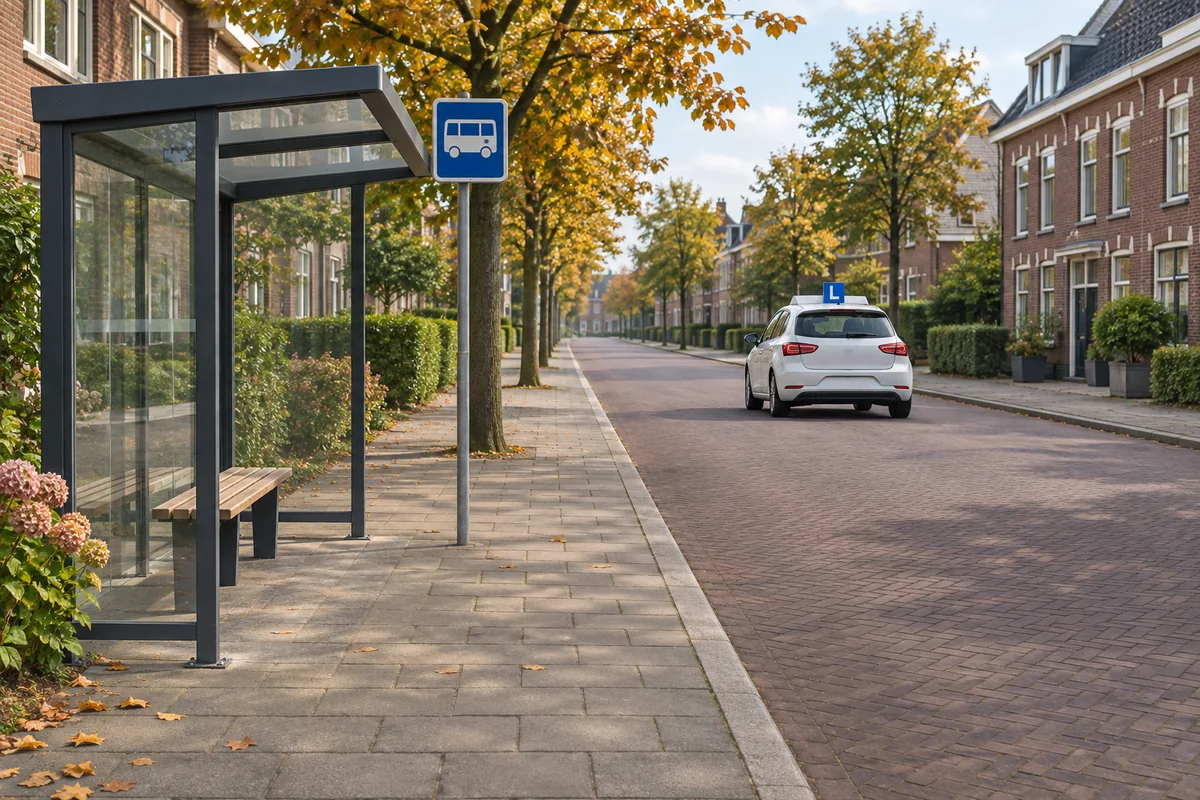
Check the road markings first
You want to pull over and see a bus  stop sign. Look for a row of white blocks marking the stop. You must not choose to stop alongside the section marked with those blocks. The markings can extend beyond the sign. The rule still applies when the stop is empty.
No blocks? Check your distance from the sign
Without block markings, you must not choose to stop less than 12 metres from the bus stop sign. If you are 8 metres past the sign, for example, you are still too close. If there are blocks, use the marked section to find the boundary. A place outside that section is not automatically suitable: check other restrictions and whether you can stop safely.
Getting out immediately is different from waiting
The bus stop rule makes an exception for passengers who get in or out immediately. Imagine a passenger who is already there and gets straight in. Stop only for the time needed, provided it is safe and no other prohibition applies. For example, check for cyclists before opening a door. Waiting for someone who has not arrived does not qualify, even if the engine is running.
Dropping off a parcel does not qualify
Taking a box out of the car is unloading goods. It is not a passenger getting out, so the bus stop exception does not apply. Find a place where stopping is permitted before making the delivery. If traffic itself brings you to a halt, for example in a queue, that is different from choosing to pull over to deliver a parcel.
Practise the distinction
Ask yourself two questions in each situation: are there blocks, or must I check the distance from the sign? Am I stopping to let someone get in immediately, or do I intend to wait, unload or park? Then compare your answer with the explanation and practice questions in the public transport lesson.