Legislation & safety
After a collision: what should you do?
A calm sequence for safety, assistance, exchanging details and reporting damage after a traffic collision.
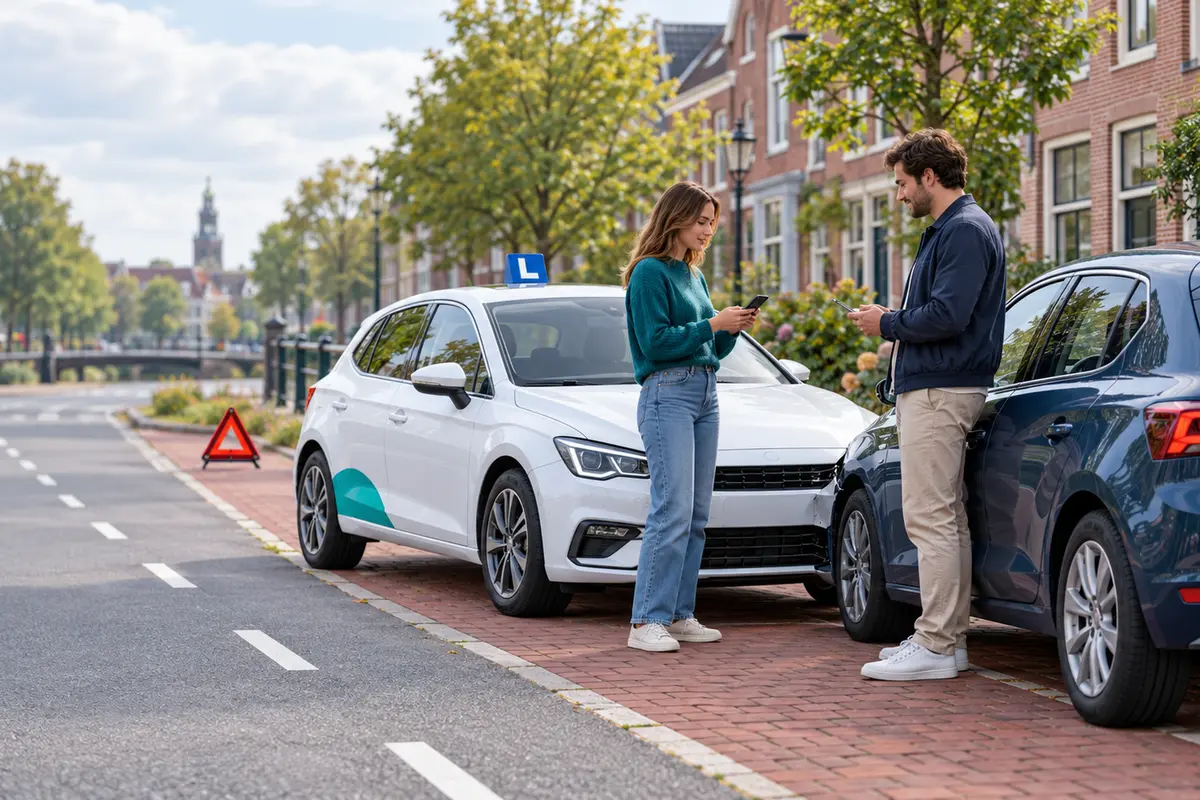
Remember one clear sequence
A collision can be unsettling. Follow a clear sequence: stop, reduce danger, arrange assistance, exchange details and report the damage. This helps you avoid overlooking a legal duty or important safety detail.
1. Stop and check whether anyone needs help
If you know or should reasonably suspect that the collision caused injury or damage, do not simply leave. First check whether you and others are safe. Do not leave someone who urgently needs medical assistance in a helpless condition. Call 112 for injury, danger to life or another immediate danger, and follow instructions from the emergency operator and services.
2. Prevent a second collision
Do not remain in a live traffic lane to take photographs. If driveable vehicles with limited damage only can safely be moved out of traffic, do so. Record the scene only when this creates no further danger. If there are injuries, you are unsure about moving anything or the carriageway cannot safely be cleared, follow emergency-service instructions.
3. Exchange the right details
Properly allow the other person to establish your identity and that of the motor vehicle. Exchange names and contact details, registration numbers and insurance details. Also record the place, time and factual circumstances. A photograph or phone number alone does not replace those details. Complete a damage form or digital report together where possible.
4. When should you contact police?
Police do not automatically attend every minor property-damage collision. Contact police for injuries, very extensive damage, a carriageway that cannot safely be cleared, aggression, an unresolved dispute or suspected alcohol, drugs, unlicensed driving or uninsured driving. If aggression occurs, move to safety first.
Exchanging details is not an admission of fault
Describe the facts calmly and completely. Liability is assessed afterwards; police do not automatically decide fault in an ordinary claim and exchanging details is not itself an admission of liability. Report the damage according to your insurer’s instructions.
How to remember it
STOP: Stop. Take stock of safety and injuries. Organise help. Provide personal and vehicle details. Use this only as a memory aid; read the full conditions in Duties after a traffic collision and practise the different situations.
Sources
- Wegenverkeerswet 1994, artikelen 7 en 184 — geldende tekst geraadpleegd 12 oktober 2026
- Politie — Ik ben betrokken bij een verkeersongeval. Wat moet ik doen? Geraadpleegd 12 oktober 2026
- Politie — Politie gaat niet naar elk verkeersongeval. Geraadpleegd 12 oktober 2026
- Rijksoverheid — Wanneer kan ik alarmnummer 112 bellen? Geraadpleegd 12 oktober 2026